How to Make Money With Print on Demand in 2026 (Complete Beginner’s Guide)
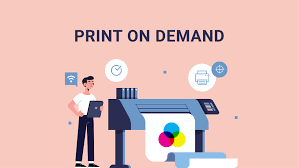
Print on demand (POD) is one of the most genuinely passive online income models available to beginners. You create a design once, upload it to a platform, and that design earns money every time someone buys the product it’s printed on — without you holding inventory, handling shipping, or doing anything beyond the initial upload. The platform prints, packs, and ships every order. You collect a margin on each sale.
The model has real limits — margins per sale are lower than private label and the market is competitive — but it also has genuine advantages that most other online income streams don’t: zero upfront investment, fully passive after setup, and income that scales with traffic rather than your time. A design you upload today may still be earning in 2030 with no additional effort.
This guide covers how print on demand actually works, the best platforms in 2026, how to create designs without being a graphic designer, which niches currently earn the most, realistic income expectations, and the specific strategy that separates POD shops that earn from those that don’t.
How Print on Demand Works — The Complete Model
The print on demand process has five steps, and after the first two you’re not involved:
The platform charges the retail price to the customer, deducts its base cost (printing + product + fulfilment), and pays you the difference — your margin. A t-shirt selling at $24.99 with a base cost of $14.99 generates $10 per sale. A mug at $15.99 with a base cost of $6.99 generates $9. You set the retail price, which determines your margin.
The Best Print on Demand Platforms in 2026
Redbubble is the best starting platform for most beginners because it has millions of monthly buyers already searching for designs. You upload a design and Redbubble’s internal search surfaces it to relevant buyers — no external traffic required. The trade-off is lower margins and significant competition from established sellers.
What sells on Redbubble: Niche humour (profession-specific, hobby-specific), fan communities (with original designs — not copyrighted characters), nature and botanical illustration, witty quote designs for specific identities (“introverts,” “dog moms,” “teachers”), and minimalist graphic designs. Generic “inspirational quote” designs are massively oversaturated and earn almost nothing.
- Built-in marketplace traffic
- Apply design to 70+ products instantly
- No external promotion required to start
- Free forever — no monthly fees
- Lower margins than own-store models
- 6–8 week payment delay
- Algorithm takes weeks to surface new designs
- High competition in popular categories
Merch by Amazon puts your designs in front of Amazon’s enormous customer base — the most purchase-intent traffic of any platform. The margins are fixed by Amazon’s pricing structure rather than being a percentage, but the conversion rate and traffic volume more than compensate. The main barrier is the approval process: Merch requires an application and new sellers start with limited upload slots (10 designs), expanding as sales accumulate.
The tier system: New accounts start at Tier 10 (10 live designs). Reaching 10 sales unlocks Tier 25. Reaching 25 more sales unlocks Tier 100, and so on. The tier system means Merch income compounds slowly at first — but once you reach Tier 500+, the income potential is significant due to Amazon’s traffic volume.
- Amazon’s enormous buyer traffic
- Highest conversion rate of any POD platform
- No upfront cost
- Prime eligibility — faster shipping builds trust
- Application required — approval takes weeks
- Starts very limited (10 design slots)
- Lower product variety than Redbubble
- Strict content policy
Running your own Shopify store with Printful as the POD fulfilment backend gives you significantly higher margins, full brand control, and no platform competition — but requires you to drive your own traffic. This model suits POD sellers who have already validated designs on Redbubble or Merch and want to scale with better economics, or those who already have an audience (Instagram following, email list, blog traffic) to sell to.
- Highest margins of any POD model
- Full brand control — your store, your name
- No competition from other sellers in your store
- Customer data is yours (email list, retargeting)
- Monthly cost ($29+)
- You must drive all traffic
- Best as a second step after marketplace validation
Etsy’s marketplace attracts buyers specifically looking for unique, personalised, and handmade-style products — which makes it exceptionally well-suited for niche POD designs. Printify integrates directly with Etsy to handle fulfilment. The combination gives you Etsy’s built-in search traffic with higher margins than Redbubble and more product variety than Merch.
Why Etsy specifically: Etsy buyers are actively shopping for gifts, personalised items, and unique products. They have higher purchase intent and higher willingness to pay than general marketplace browsers. A niche design on Etsy at $28 often outsells the same design at $18 on Redbubble because the Etsy buyer’s mindset is “find something special” rather than “find something cheap.”
- Etsy buyers have higher purchase intent
- Higher price tolerance than Redbubble
- Weekly payments
- Strong for personalised/gift products
- Listing fees + transaction fees add up
- New shops take weeks to gain algorithm trust
- Increasing competition from POD sellers
How to Create Designs Without Being a Graphic Designer
The most common reason people don’t start with POD is assuming they need design skills. You don’t. The designs that consistently earn most on Redbubble and Merch are not technically complex — they’re strategically targeted. A witty, niche-specific text design created in Canva in 20 minutes regularly outperforms elaborate illustrations because the specificity of the message connects with the right buyer, not because of visual complexity.
🎨 The Complete Design Creation Workflow
The Best Niches for Print on Demand in 2026
The highest-earning POD sellers are not trying to appeal to everyone. They own 3–5 specific niches deeply — hundreds of designs each — and dominate search results within those niches. Here are the categories with consistently strong performance:
Realistic Income Expectations: What POD Actually Pays
Print on demand income is directly proportional to number of designs published, niche specificity, and time given for platform algorithms to surface designs. Month 1 is almost always minimal — not because the designs don’t work, but because platforms take 2–6 weeks to index and start showing new designs in search results.
💰 Realistic Monthly Income by Design Volume and Timeline
These figures assume niche-targeted designs (not generic), proper title/tag optimisation, and designs published on multiple platforms simultaneously (Redbubble + Merch + Etsy). Sellers with 500+ designs across multiple platforms in strong niches regularly earn $1,000–$3,000/month. The income is genuinely passive — no ongoing work required beyond occasional new design uploads.
Print on Demand vs Dropshipping: Which Is Right for You?
Both models involve selling products you don’t hold in inventory. The key differences:
- Upfront investment: Both are $0 to start. Dropshipping may require a Shopify subscription ($29/month); POD on marketplace platforms (Redbubble, Merch) is completely free.
- Traffic: POD marketplace platforms (Redbubble, Merch, Etsy) have built-in audiences. Dropshipping requires you to drive all traffic through ads or SEO.
- Margins: Dropshipping can achieve higher margins (30–60%) with the right products. POD marketplace margins are typically lower (15–30%) but require no traffic investment.
- Creativity requirement: POD requires design creativity — the design is your unique value. Dropshipping requires product research and marketing creativity.
- Scalability: Both scale. Dropshipping scales with ad spend. POD scales with design volume — more designs, more search visibility, more passive income.
- Risk: Neither carries inventory risk. Both can be started with zero capital. POD has no ad spend risk; dropshipping’s main risk is ad spend without sufficient return.
The Strategy That Separates High Earners From Low Earners
Most beginners treat POD as a lottery — upload designs and hope some sell. High earners treat it as a data-driven design business. The difference in approach:
- Research before creating: Use Redbubble’s search, Merch Informer (tool), or simply manual Etsy/Redbubble search to find what’s already selling in your niche. Design into proven demand, not against it.
- Publish in clusters, not at random: If your teacher-themed designs are selling, create 20 more teacher variations — different subjects, funny scenarios, gift occasions — before moving to a new niche. Cluster depth builds search authority within a niche faster than spreading across many niches with 3–5 designs each.
- Use Pinterest as an accelerator: Pinterest pins linking to your Redbubble or Etsy listings drive traffic before marketplace algorithms fully index your designs. Create 3 Pinterest pins per design and publish them consistently. Pinterest traffic compounds just like SEO.
- Multi-platform from Day 1: Upload every design to Redbubble, Merch (once approved), and Etsy simultaneously. Each platform has different buyers and different search algorithms. A design that underperforms on Redbubble may be a top seller on Etsy.
- Analyse and double down monthly: Every month, check which designs generated sales. Create 5–10 variations or adjacent designs from each winner. Kill or ignore non-performers. Your best-performing 10% of designs should receive 50% of your new design effort.
Frequently Asked Questions
Do I need design experience to start POD?
No. The most consistent earners on Redbubble and Merch use Canva for text-based designs and AI image generators for illustrated designs. Neither requires prior design experience. What matters more than technical design skill is niche research — understanding exactly what your target buyer wants to see on a product. A non-designer who deeply understands the nursing community will consistently outperform a talented designer who doesn’t.
How long before I make my first sale?
With active promotion (Pinterest pins, sharing in relevant niche communities), most beginners make their first sale within 2–4 weeks. Without promotion, relying entirely on platform search algorithms, first sales typically arrive in Week 3–6 as algorithms index your designs. Merch by Amazon is slower due to the tier system — your first 10 sales may take 2–3 months with only 10 design slots.
Can I do POD from Ghana or other African countries?
Yes — POD is fully location-independent. Redbubble, Merch by Amazon, and Etsy all accept international sellers. Printify and Printful both work with international Shopify stores. Payments from Redbubble and Merch are made via PayPal. Etsy pays via Payoneer for sellers in countries without direct deposit support. See How to Get Paid Internationally as a Freelancer in Africa for the payment setup specific to African countries.
What’s the biggest mistake beginners make with POD?
Uploading generic designs to unspecific audiences and expecting the platform to do all the work. “Motivational quote” designs, generic animal illustrations, and unoriginal concepts are massively oversaturated on every POD platform. The buyers who find them have infinite alternatives at lower prices. The fix is radical niche specificity — designs that speak so directly to a specific audience that the right buyer’s immediate reaction is “I need this.”
Start Today — The Designs You Upload This Week Can Still Earn in 2030
Print on demand is one of the most genuinely passive income models available to a beginner with zero capital. The designs you upload today keep earning while you sleep, while you work, and while you build other income streams in parallel. The income compounds with design volume — and each new design adds to a catalogue that earns indefinitely.
The starting steps are simple: create a free Redbubble account, research what’s already selling in 2–3 niches you understand, create your first 20 designs in Canva, apply for Merch by Amazon, and set up Etsy + Printify. Create 3 Pinterest pins per design. Track which designs sell. Create more variations of those. Repeat monthly.
That’s the complete system. It requires patience in Month 1, consistency through Month 3, and data analysis from Month 4 onward. By Month 6, with 80+ well-targeted designs across multiple platforms, the income is real, recurring, and genuinely passive.
More at OurInternetBusiness.com
Practical guides on print on demand, passive income, and building online income that earns while you sleep. Visit OurInternetBusiness.com and bookmark it.