Dropshipping vs Print on Demand: Which Is Better for Beginners in 2026?
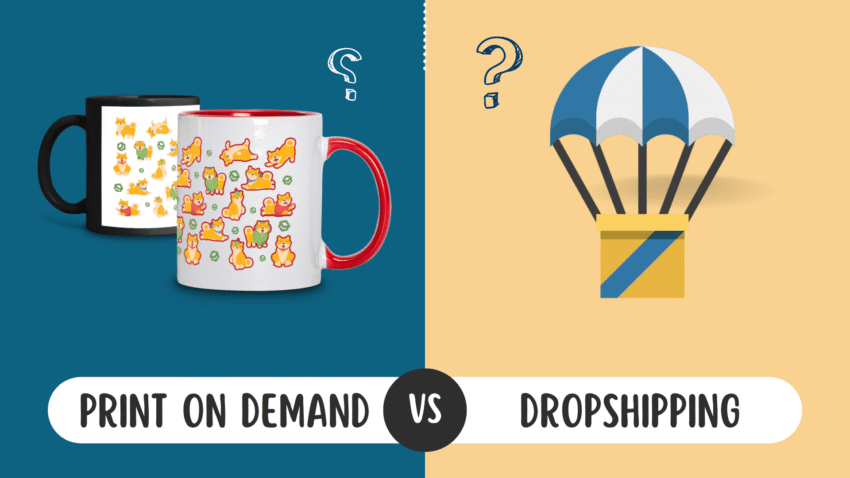
Both dropshipping and print on demand let you sell physical products online without holding inventory. Both require zero upfront stock investment. Both can be started today for free. So which one is actually better for a beginner in 2026 — and why do so many guides give you a vague “it depends” answer instead of a real one?
This guide gives you the real answer: a head-to-head comparison across every dimension that matters — startup cost, profit margins, how long until first sale, traffic requirements, creative demands, scalability, and risk. Plus an interactive profit calculator, a 12-month income projection chart, and a personalised quiz that tells you which model fits your specific situation.
How Each Model Works
Before comparing them, it helps to see exactly how each model’s order flow works — because the differences in that flow determine everything else.
Head-to-Head: Every Factor That Matters
| Factor | 🟡 Dropshipping | 🟢 Print on Demand |
|---|---|---|
| Startup cost | $0–$29/mo (Shopify) | $0 — completely free on Redbubble / Merch |
| Profit margin | 15–40% depending on product & supplier | 15–35% on marketplaces; 40–60% on own store |
| Traffic source | You drive all traffic (ads, SEO, social) | Marketplaces have built-in audience (Redbubble, Merch, Etsy) |
| Creative skill needed | Product research skill — no design required | Basic design skill (learnable with Canva in hours) |
| Time to first sale | Days with paid ads; weeks–months with organic | Weeks (platform indexing); faster with Pinterest promotion |
| Competition level | High — same suppliers, same products | Lower per niche — your design is unique |
| Passive after setup? | Partially — needs ongoing ad management & supplier monitoring | Yes — designs earn with no ongoing management |
| Ad spend required? | Usually yes for fast results ($5–$50+/day) | No — marketplace traffic is free |
| Income volatility | High — ad costs and supplier issues cause swings | Lower — marketplace income is more stable |
| Scalability ceiling | Very high — profitable stores scale to $10K–$100K+/mo | High but slower — compounds with design volume over months |
| Returns/customer service | You handle — can be time-consuming | Platform handles on marketplace sales |
| Product variety | Unlimited — any product from any supplier globally | Limited to printable surfaces (t-shirts, mugs, posters, etc.) |
| Brand building | Strong — your store, your brand, your customer relationships | Weak on marketplaces; strong on own Shopify+Printful store |
Interactive Profit Calculator
Adjust the sliders to see how profit compares across both models at different sales volumes and price points.
📊 Monthly Profit Simulator
12-Month Income Projection: What Growth Looks Like
This chart shows a realistic income trajectory for a consistent beginner following best practices for each model. Hover over bars for exact values.
Monthly Net Income — Consistent Beginner (Year 1)
The chart shows a key insight: dropshipping income can spike faster if the seller invests in paid ads and finds a winning product — but it’s also more volatile month-to-month. POD income grows slowly but compounds steadily as more designs accumulate and rank in search. By Month 9–12, both can reach similar levels — but they got there differently.
Strengths at a Glance
Model Strengths — Visual Comparison
Month-by-Month Timeline: What to Expect
Who Each Model Is Best For
You understand Facebook/TikTok ads or are willing to learn. You have $200–$500 as a testing budget. You want faster income potential and are willing to actively manage a store.
You enjoy design or are willing to learn Canva basics. You want income that grows without ongoing management. You have no budget for advertising and need a zero-cost start.
You want to own your customer relationships, collect emails, run retargeting, and build a recognisable brand that could eventually sell or attract investment.
You have a job, limited hours, and want income that compounds without requiring daily attention. POD’s marketplace model means designs earn while you do other things.
Start with POD (zero cost, passive foundation). Use the passive income to fund dropshipping ad tests. The two models complement each other — one provides passive stability while the other provides higher active upside.
POD requires zero ad spend and no upfront cost. Designs earn in USD regardless of your location. Payments via PayPal or Payoneer. No supplier relationships or shipping logistics to manage internationally.
Take the Quiz: Which Model Is Right for You?
Answer 5 questions and get a personalised recommendation based on your specific situation, goals, and constraints.
🎯 Find Your Best Model
Select the answer that best describes you for each question
The Honest Verdict
Neither model is objectively better. They are structurally different businesses that suit different people and different situations.
Dropshipping wins on: scalability ceiling, brand-building potential, product variety, and speed of income with paid advertising. If you want to build a real e-commerce business that could scale to $10,000+/month, dropshipping is the more powerful model — but it requires active management, advertising knowledge, and a testing budget.
Print on demand wins on: zero upfront cost, fully passive income after setup, no ad spend required, no customer service on marketplace sales, and lower ongoing time commitment. If you want passive side income that compounds without daily attention, POD on marketplaces is one of the cleanest income models available to a beginner.
The best answer for most beginners: Start with print on demand on Redbubble and Etsy — zero cost, zero risk, builds passively. Once that’s generating $200–$400/month, use that income to fund a dropshipping store test. The two models stack naturally — one provides the passive floor, the other provides the active growth ceiling.
More at OurInternetBusiness.com
Honest comparisons, practical guides, and real income strategies — no hype. Visit OurInternetBusiness.com and bookmark it.