Niche Marketing for Small E-Commerce Brands: How to Find Your Audience, Own Your Space, and Outsell Bigger Competitors
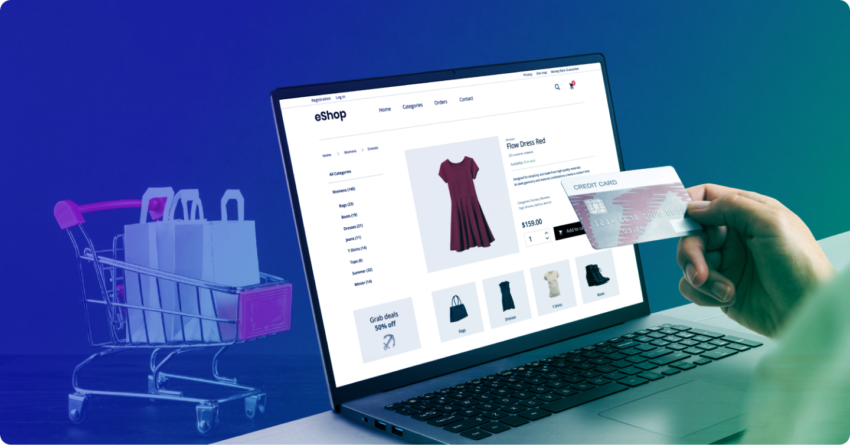
The most common mistake small e-commerce brands make is trying to compete with large retailers on the same terms — broad product range, general audience, competing on price. Against Amazon, Walmart, or any established category leader, a small brand competing broadly will always lose. They have more products, more reviews, lower prices, faster shipping, and larger advertising budgets. There is no version of this fight a small brand wins.
What a small brand can do that large retailers cannot is be genuinely, deeply relevant to a specific, defined group of people. A niche strategy doesn’t mean selling less — it means selling to fewer people who care far more, buy more readily, return more often, and tell others who are exactly like them. Niche marketing is how small e-commerce brands build sustainable businesses that large retailers literally cannot replicate.
This guide covers the complete niche marketing strategy for small e-commerce brands: how to identify and validate a niche, how to position your brand within it, which marketing channels work best for niche audiences, and how to convert niche positioning into the kind of customer loyalty that keeps acquisition costs permanently low.
Why Niche Marketing Works — The Economics Explained
Niche marketing works for small brands because it changes the economics of customer acquisition and retention in ways that broad targeting cannot. When you speak directly and specifically to a defined group, three things happen simultaneously:
- Ad costs drop. Facebook, Instagram, and Google ads become cheaper and more effective when your targeting is precise. A $20 CPM to a specific, high-intent niche audience routinely outperforms a $10 CPM to a broad general audience because the conversion rate more than compensates for the higher cost per impression.
- Conversion rates rise. A visitor who lands on a product page that feels exactly made for them — in language, imagery, and positioning — converts at 3–5× the rate of a visitor who lands on a generic product page. The niche positioning does the selling before the product does.
- Repeat purchase rates increase. Customers who feel genuinely understood by a brand — not just served by it — return. The emotional connection a niche brand builds with its specific audience is not something a general retailer can replicate by expanding into that category.
“Premium skincare products for everyone. Shop moisturisers, serums, toners, and more.”
“Skincare for Black women with hyperpigmentation. Products formulated specifically for melanin-rich skin, developed with dermatologists who look like you.”
The second version converts better, costs less to acquire customers for, generates more word-of-mouth within its community, and faces dramatically less competition — despite being a subset of the first version’s market. That is the niche marketing advantage.
A profitable niche for e-commerce sits at the intersection of three requirements: there are enough people in it (demand), they spend money on the problem you solve (willingness to pay), and the existing solutions don’t fully serve them (gap). All three must be present. A passionate community that doesn’t buy things is a hobby, not a market. A spending market with no community is a commodity battle. A gap with no demand is an innovation without customers.
The niche validation framework:
| Validation Question | How to Check | What You Need |
|---|---|---|
| Does a community exist? | Search Facebook Groups, Reddit, Instagram hashtags, YouTube channels for this audience | At least one active community with 10,000+ members or followers |
| Do they already spend money? | Search Amazon, Etsy, existing Shopify stores for products in this niche. Look for review counts. | Existing products with 100+ reviews — proves buying intent |
| Is there a gap? | Read the 1-star and 3-star reviews of top competitors. What do buyers consistently complain about? | A recurring complaint or unmet need your product could address |
| Can you reach them affordably? | Test a Facebook/Instagram interest audience. Check if influencers exist. Check Google search volume. | Reachable through at least 2 channels — ideally organic + one paid |
| Is the niche too broad? | Can you describe your ideal customer in one specific sentence? If not, narrow further. | One-sentence customer: “women over 40 with sensitive skin who avoid parabens” |
| Is there margin? | Research product cost vs market price. Aim for 50%+ gross margin on dropship; higher on own-brand. | Gross margin above 50% to sustain marketing costs and remain profitable |
The niche narrowing formula:
🎯 From broad category to winning niche
Real niche narrowing examples:
Positioning is the answer to a single question your potential customer asks the moment they land on your store: “Is this for me?” Every element of your brand — store name, tagline, imagery, product descriptions, email subject lines, social media voice — should answer that question with an immediate, unambiguous “yes” for your target customer.
Niche brands that convert well don’t try to appeal broadly within their copy. They speak directly, specifically, and even exclusively to their target customer. This specificity feels excluding to people outside the niche — which is correct. A niche brand’s copy that makes a non-target customer feel like the product “isn’t really for them” is working exactly as intended.
The four elements of effective niche positioning:
- Customer language, not brand language: Use the exact words your target customer uses to describe their problem, not the words you use internally to describe your product. Read their Reddit posts, Facebook group discussions, and product reviews. Their language is your copy.
- The specific identity signal: Your brand should signal that you understand your customer’s specific identity, not just their product need. “For serious home espresso brewers” signals identity. “Quality coffee accessories” signals a product category. Identity signals create loyalty; category signals create comparison shopping.
- The clear competitor contrast: Your positioning should implicitly or explicitly contrast with what generic alternatives offer. “Unlike mass-market options, designed specifically for X” is not a negative message — it’s the clearest possible statement of your niche value.
- Proof of niche expertise: Founder story, formulation details, material sourcing, community membership — anything that demonstrates you are genuinely part of the niche, not just selling to it. Niche customers have strong bullshit detectors for brands that are pretending to understand their community without actually being in it.
“High-quality dog harness made from premium materials. Adjustable for comfort. Available in multiple sizes. Great for all dogs.”
“Built for dogs that never slow down. Our trail harness handles 20-mile days, creek crossings, and scrambles — tested by working search dogs and designed for trail runners whose dogs keep pace. Not for dogs who pull on the pavement. Definitely for dogs who don’t know what ‘tired’ means.”
Different niches gather in different places. The most important channel decision for a niche e-commerce brand is not “which channel is most popular” but “where does my specific niche community actually spend time and discover new products?” A niche that lives on Instagram requires a completely different approach from one that congregates on Reddit or discovers products through Google search.
The channel sequencing for new niche brands:
- Month 1–2: Identify 2–3 active communities (Facebook Groups, Reddit, Instagram hashtags) where your niche gathers. Engage genuinely — answer questions, share knowledge, introduce yourself without immediately selling. Build presence before promotion.
- Month 2–3: Set up email capture on your store. Offer a genuine incentive (10% off first order, a free relevant guide, an exclusive product bundle). Every visitor should have a reason to give you their email before leaving.
- Month 3–4: Identify 5–10 micro-influencers in your niche with 2,000–30,000 followers. Send free product with a genuine personal message — not a template. Expect 30–50% to post organically if the product genuinely fits their content.
- Month 4–6: Begin niche SEO — research buying-intent keywords specific to your niche (under-served by large retailers). Start a blog or content section targeting these terms. Each article builds permanent organic traffic to your store.
- Month 6+: Add paid ads only after organic has proven which messages and products convert. Use organic performance data to build paid audiences — your highest-converting organic audience is the model for your paid targeting.
A niche e-commerce brand’s product strategy should be the opposite of a general retailer’s. General retailers compete on breadth — as many SKUs as possible. A niche brand wins on depth — a carefully curated range that covers every meaningful product need within the specific niche, and nothing outside it.
The hero product model:
Every successful niche e-commerce brand is built around one hero product — the item that defines the brand, has the clearest niche positioning, and generates the most initial purchases. Everything else in the range either supports, complements, or deepens the hero product’s use case.
- Hero product: Solves the core niche problem better than existing alternatives. This is your acquisition product — the item people discover first. It should have the clearest positioning, the most reviews, and the best photography.
- Complementary products: Natural additions that customers who bought the hero product will need next. These drive repeat purchase without any additional customer acquisition cost.
- Consumables or replenishables (if possible): Any product in the range that gets used up and needs reordering creates built-in repeat revenue. A niche brand with one consumable product in its range has a fundamentally different LTV curve than one without.
- Brand extensions: Additions to the range that deepen the niche identity without diluting it. The adventure dog brand can add dog nutrition, first aid kits for trail dogs, and collapsible water bowls. It cannot add “general pet toys” without diluting its positioning.
The structural advantage of a niche e-commerce brand over any large retailer is community. Amazon can copy your products. Large retailers can undercut your prices. Nobody can replicate the genuine community a niche brand builds with its specific audience over time. A brand that has become genuinely embedded in a niche community — through content, events, conversations, and consistent presence — creates a loyalty that pricing pressure simply does not dislodge.
How niche e-commerce brands build genuine community:
- Create content that serves the niche, not just the brand: A blog, YouTube channel, podcast, or newsletter that makes your niche audience better at their passion — regardless of whether they buy from you — builds the kind of brand trust that converts and retains customers over years. The adventure dog brand’s YouTube channel about training and trail tips serves dog owners whether or not they buy the harness. That service is the relationship.
- Engage, don’t broadcast: Reply to every comment. Ask questions. Share customer stories. Post behind-the-scenes of product development. Niche communities reward brands that act like community members — not brands that act like advertisers who have bought their way into the community.
- Customer co-creation: Involve your best customers in product decisions — polls on new colourways, early access to new releases, requests for feedback on product prototypes. This converts your most loyal customers into brand advocates who feel genuine ownership of the brand’s direction.
- User-generated content programme: Ask customers to share their use of your product with a branded hashtag. Feature this content prominently. UGC is both free content and social proof — and for niche audiences, seeing someone exactly like them using your product is more persuasive than any professional photography.
The Metrics That Matter for Niche E-Commerce Brands
General e-commerce metrics like total revenue and website traffic can be misleading for niche brands — especially in the early stages. The metrics that predict long-term success for niche brands specifically:
- Repeat purchase rate (target: 30%+ within 12 months): The single most important signal that your niche positioning is working. Customers who return are customers who feel the brand is genuinely for them.
- Community engagement rate: Comments, saves, shares, and replies — not just likes. Passive engagement (likes) is a weak signal. Active engagement (comments, shares, saves) indicates a community is forming.
- Net Promoter Score (NPS): A simple survey: “How likely are you to recommend us to a friend?” Niche brands should consistently outperform general retailers here because the specificity of the recommendation makes it natural. “You should check out this brand — it’s made specifically for people like you” is far easier to say than “here’s a good general retailer.”
- Customer acquisition cost (CAC) trend: As community and word-of-mouth builds, CAC should decline over time for a niche brand. If CAC is increasing, niche positioning may not be strong enough to generate organic referral.
- Average order value and LTV: Niche customers who trust a brand buy more per order and more often. Tracking LTV against CAC — and watching the ratio improve over time — is the clearest signal that the niche strategy is working.
Frequently Asked Questions
Can a niche be too small to build a business on?
Yes — and this is worth testing before investing heavily. A niche with fewer than 50,000 engaged people globally who actively spend money in this area may be too small for a sustainable e-commerce business at typical margins. The validation framework above — specifically the community size and existing product review count checks — helps identify this before product investment. When in doubt, start with a dropshipping test to validate demand before holding inventory.
Should I start broad and narrow down, or start narrow immediately?
Start narrow. The most common advice new e-commerce founders receive — “start broad and see what sells” — optimises for short-term data at the expense of brand coherence. A brand with no clear niche positioning from Day 1 accumulates customers who have no reason to return or refer. Starting narrow means slower initial growth and faster long-term compounding. Every major niche e-commerce success story started with an almost uncomfortably specific focus.
How do I compete when a large brand enters my niche?
Go deeper. When Amazon, a large retailer, or a well-funded brand enters your niche, the correct response is not to broaden your positioning to compete — it’s to narrow further and deepen community. A large brand entering a niche will always be able to offer lower prices and broader range. They cannot replicate the genuine community relationships, founder authenticity, and niche depth a small brand has built over years. Your defence is embedding more deeply in the community, not competing on the large brand’s terms.
Does niche marketing work for dropshipping specifically?
Yes — and it’s arguably more important for dropshipping than any other model. Dropshipped products are typically available from many suppliers and competitors. The only sustainable differentiator in dropshipping is brand positioning and marketing, since the products themselves are not exclusive. A dropshipping store with strong niche positioning and community converts at 3–5× a general “winning products” dropshipping store because customers are buying into the brand, not just the product.
The Niche Is the Strategy
For a small e-commerce brand, niche marketing is not a tactic alongside other tactics. It is the strategy from which all other decisions follow. Product selection, channel choice, content creation, influencer partnerships, paid advertising, email marketing — all of these are more effective, less expensive, and more sustainable when the niche is clearly defined and consistently honoured.
The brands that compete successfully against large retailers in 2026 are not the ones that replicated the large retailer model at smaller scale. They are the ones that identified a specific group of people who felt unserved, built products and a brand identity that spoke directly to them, created community around a shared identity rather than just a transaction — and refused to dilute that focus when growth looked possible in adjacent directions.
Define your niche. Go deep into it. Speak only to your customer. Serve them better than anyone else can. The economics follow from that clarity.
More at OurInternetBusiness.com
Practical guides on e-commerce, niche marketing, and building online businesses that compound. Visit OurInternetBusiness.com and bookmark it.