
How to Start Affiliate Marketing With No Website, No Audience, and No Experience
How to Start Affiliate Marketing With No Website, No Audience, and No Experience
Most affiliate marketing guides assume you already have something: a blog with traffic, an email list, a social media following, or at minimum a website. But the majority of people who want to start affiliate marketing have none of those things. They have a phone, a laptop, internet access, and the willingness to learn — and those guides leave them stranded before they’ve started.
This guide is different. Every traffic method, every platform, and every strategy covered here works without a pre-existing website or audience. Some of these methods generate commission income faster than a website ever could. Others build passive income that compounds over months without ongoing work. And all of them can be started today, free, with no technical knowledge required.
What follows is the most complete resource on website-free affiliate marketing available — covering the ecosystem, the six best no-website traffic channels in depth, the best affiliate platforms with real commission data, a 90-day step-by-step plan, an interactive income calculator, and the specific mistakes that prevent most beginners from ever seeing their first commission.
How Affiliate Marketing Actually Works
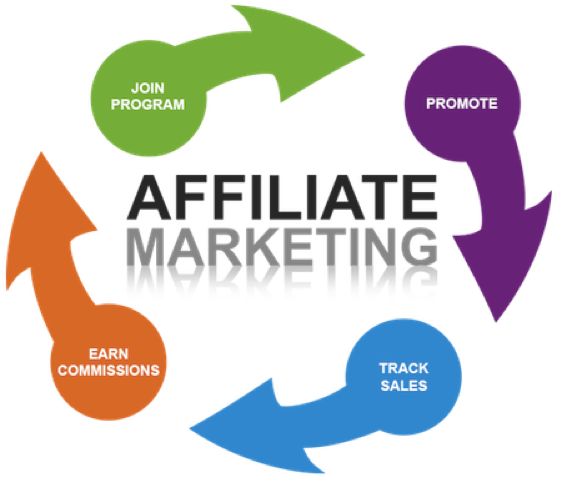
Before choosing a traffic method, it helps to understand the four players in every affiliate transaction and how money flows between them. Most beginners only see their own role; understanding all four changes how you approach the whole business.
The Affiliate Marketing Ecosystem
Your role: create content or promotions that send customers to the merchant via your unique tracking link. Every qualifying purchase earns you a commission.
The critical insight the diagram makes clear: you are the bridge between the customer and the merchant. Your job is not to sell — it’s to connect people who have a problem with products that solve it. The persuasion happens at the merchant’s sales page. Your job is getting the right person to that page through your link.
The 6 Best Traffic Methods That Require No Website
These six channels generate affiliate commission without you needing a domain, hosting, or a CMS. Each one has different strengths, speed, and effort requirements. Study all six before committing — the right combination depends on your niche and how you want to spend your time.
Write detailed articles on Medium or Substack that rank in Google. Both platforms have established domain authority that helps your content rank faster than a brand-new personal blog. Embed affiliate links naturally within articles (some programmes allow this — always check ToS).
- Free to publish, established SEO authority
- Medium’s Partner Program adds ad income
- Substack builds email subscribers simultaneously
- Articles rank independently — compounds over time
Create faceless YouTube videos reviewing products, comparing tools, or explaining how things work in your niche. Put affiliate links in the video description. YouTube’s search algorithm surfaces videos for product-related queries constantly — and videos earn commissions for years after uploading.
- Description links are Amazon Associates compliant
- Videos compound — older videos keep earning
- AI voiceover + stock footage = no camera needed
- Also earns AdSense once eligible
Pinterest is a visual search engine with 500M+ monthly users actively searching for product ideas, home décor, recipes, fashion, and more. Pin images linking directly to affiliate product pages or your Medium/Substack articles. Pinterest pins have a 6-month average lifespan — content you create today drives traffic for months.
- No follower count needed to get traffic
- Search-based — high buying intent
- Direct affiliate links allowed on most pins
- Takes 30 min/day to maintain
Short-form video has the highest organic reach of any current content format. A 30-second honest product review can reach 50,000+ views with zero followers. Put your affiliate link in bio (use Linktree), mention it in the video, or use TikTok Shop’s native affiliate programme which pays commission directly within the app.
- TikTok Shop affiliate: no external link needed
- Highest organic reach per post of any platform
- New accounts can go viral immediately
- Works well for physical product niches
Millions of people ask product recommendation questions on Reddit and Quora every day. Genuine, helpful answers that recommend affiliate products can drive significant commission income — but only if approached with real value first. Transparent disclosure + genuinely useful answer = trusted recommendation that converts. Spam = instant ban.
- High-intent questions already asking for recommendations
- Answers rank in Google search results
- Quora allows affiliate links with disclosure
- Reddit works better with indirect links (article first)
Build an email list using Kit or Beehiiv (both free, no website needed — they host your signup page). Grow it via social media promotion and a free lead magnet. Email affiliate recommendations to your list. Email converts at 5–10× the rate of social media because subscribers have specifically opted in to hear from you.
- Highest conversion rate of any traffic source
- Owned audience — no algorithm dependency
- Kit/Beehiiv host your list with no website
- Most affiliate programmes allow email (except Amazon)
Find Your Best Niche + Platform Combination
The right affiliate platform depends on your niche and chosen traffic method. This matcher gives you a personalised recommendation based on your specific situation.
🎯 Niche + Platform Matcher
Select your niche and primary traffic method to get a tailored platform recommendation
Your recommendation
Loading…
The Best Affiliate Platforms for No-Website Beginners
Not all affiliate programmes allow promotion through social media, email, or video — always read the Terms of Service. The platforms below either explicitly allow non-website promotion or have flexible enough policies that most traffic methods work.
The most recognised affiliate programme — instant trust from buyers. Allows links in YouTube descriptions, Pinterest, and blogs. Does NOT allow affiliate links in emails — this is a hard rule. The 24-hour cookie is short but the basket effect (commission on everything bought within 24hrs) compensates.
25,000+ merchant programmes across virtually every niche. More generous with non-website promotion than Amazon — most merchants allow email and social media. Commission rates significantly higher than Amazon. Join the network once, apply to individual merchants within it.
Home to top SaaS brands — Shopify ($150–$300/referral), Canva Pro ($36/referral), Semrush ($200/subscription), Airbnb. If your content covers online business, marketing, or tech tools, Impact is where the highest individual commissions are. Modern interface and excellent tracking.
Digital products at dramatically higher commission rates than physical products. No approval required — instant access to 10,000+ digital products. 60-day cookie window. Works well through email (no Amazon restriction). Vet products carefully — quality varies enormously. Filter by Gravity score above 20.
Large-brand network with Booking.com, GoPro, Priceline, Overstock, and many others. Strong for travel and retail niches. Better analytics and tracking than ShareASale. More competitive approval process — easier once you have some content history. Account deactivated after 6 months of inactivity.
The highest long-term income category. Kit (email platform): 30% recurring for 24 months. Teachable: 30% recurring. ActiveCampaign: 20–30% recurring. One referred customer at $49/month = $10–$15/month commission every single month for years. 50 referred customers = $500–$750/month recurring from a one-time promotion effort.
Interactive Income Calculator
Adjust the sliders to model your potential monthly affiliate income based on traffic, conversion rate, and commission. These figures reflect realistic beginner performance — not best-case scenarios.
💰 Monthly Affiliate Income Simulator
💡 Increase any single variable by 2× and income doubles. The levers: more traffic (publish more content), higher CTR (better placement and copy), higher commission (choose higher-paying programmes). At 20,000 monthly views with a 4% CTR and $20 average commission, this calculator shows $400/month. That’s achievable in Month 6–9.
Real Earnings: What No-Website Affiliates Actually Make
These are representative income examples based on the traffic methods above — not cherry-picked best cases. They show the range from beginner to established no-website affiliate:
| Traffic Method | Niche | Month 1 | Month 6 | Month 12 | Effort Level |
|---|---|---|---|---|---|
| Pinterest (20 pins/week) | Home office equipment | $8–$35 | $180–$420 | $350–$900 | Low — 30 min/day |
| YouTube (2 videos/week) | Software tools / AI | $0–$25 | $200–$600 | $600–$2,000 | Medium — 3–5 hrs/video |
| Medium (3 articles/week) | Personal finance | $5–$30 | $120–$350 | $300–$800 | Medium — 1–2 hrs/article |
| TikTok (daily content) | Physical products / beauty | $20–$80 | $300–$800 | $500–$2,500 | Medium-high — daily creation |
| Email newsletter (weekly) | Online business / SaaS | $0–$15 | $100–$400 | $400–$1,500 | Low — 1 email/week after setup |
| Reddit / Quora (daily) | Tech recommendations | $10–$50 | $80–$250 | $150–$500 | Low — helpful replies |
| Combined (3 methods) | Any focused niche | $30–$150 | $600–$1,800 | $1,500–$5,000+ | Medium — 2 hrs/day |
The 90-Day Step-by-Step Action Plan
This is the exact sequence to follow from Day 1 to your first consistent affiliate income — with specific actions, time estimates, and what to expect at each stage. Hover any step for emphasis.
- Choose a niche you understand AND that has products with real affiliate programmes (search “your niche + affiliate programme”)
- Verify demand: type your niche into Google and check “People Also Ask” boxes — each question is a potential content piece
- Choose ONE primary traffic method from the six above — the one that matches how you naturally prefer to communicate (writing, video, or visual design)
- Create accounts: your chosen platform + Pinterest (always worth having as a secondary)
- Everyone: Apply to Amazon Associates (instant approval) and ShareASale (1–3 day approval)
- Online business / SaaS niche: Apply to Impact.com for Shopify, Canva, Semrush
- Health / self-improvement: Apply to ClickBank (instant — no approval)
- Direct SaaS: Visit Kit.com/affiliates, Teachable affiliate page, ActiveCampaign affiliate page and apply directly
- Set up Payoneer for international payment receiving if based outside US/UK
- Search your niche + “best”, “vs”, “review”, “worth it”, “alternatives” in Google — note the autocomplete and People Also Ask results
- Use Ahrefs Free Keyword Generator for volume and difficulty data — target KD under 20 for Medium articles
- Search your niche on TikTok and YouTube — note which product-related videos have the most views
- Check Reddit threads in your niche for “which X should I buy” and “X vs Y” questions — these are your content briefs
- Create a content list of 20+ specific ideas before starting to publish
- Use Claude to draft the structure and first version — edit personally for accuracy, voice, and specific product knowledge
- Every piece should contain 2–3 affiliate links placed naturally where they’re helpful, not forced
- Include FTC-required disclosure: “This article contains affiliate links. If you buy through them I may earn a commission at no extra cost to you.”
- For YouTube: use AI voiceover (ElevenLabs free tier) + Canva for thumbnails + stock footage from Pexels
- For Pinterest: create 3 pin designs per content piece using Canva’s Pinterest templates
- YouTube: 1–2 videos per week minimum
- Pinterest: 10–20 pins per week (batch create on Sundays with Canva)
- Medium / Substack: 2–3 articles per week
- TikTok: 1 video per day if possible; minimum 4–5 per week
- Email: 1 send per week, every week, without exception
- Block specific time slots in your calendar — content creation at irregular intervals doesn’t compound
- Check affiliate dashboards: which specific links and products are getting clicked?
- Check platform analytics: which content pieces have the highest engagement and traffic?
- Create 3–5 new pieces closely related to your top performers (same product category, similar angle, adjacent question)
- Update your lowest-performing pieces — try a different title, add more affiliate links, or improve the content depth
- Apply for 2–3 new affiliate programmes in your niche based on what products your audience is already clicking
- Choose the second channel from the six above — ideally one that complements the first (e.g. Pinterest + Medium, or YouTube + Email)
- Repurpose existing content into the new format rather than creating everything from scratch
- A YouTube video can become a Medium article, a Pinterest board, and three TikTok clips — the research and affiliate links are the same
- Add an email list capture to wherever you’re active — even 50 engaged subscribers converts more reliably than 5,000 passive social followers
- Identify the highest-paying programmes in your niche — especially those with recurring commissions
- Create dedicated content specifically for these products: comparison videos, detailed reviews, “is X worth it” articles
- Build email sequences that recommend SaaS tools — email is the highest-converting channel for recurring commission products
- Track your EPC (earnings per click) for each programme — shift promotion effort toward highest EPC
Realistic 6-Month Income Projection
This is what monthly affiliate income looks like for a consistent beginner using two traffic methods and one focused niche. These figures assume consistent effort — not exceptional talent or viral content.
Monthly Affiliate Commission — Consistent Beginner
Two traffic channels + one focused niche + affiliate links from Day 1
The 7 Mistakes That Kill Beginner Affiliate Income Before It Starts
Understanding why most beginners fail is just as important as knowing what to do. These seven mistakes account for the vast majority of beginner affiliate earnings that never arrive.
Frequently Asked Questions
How much money can I realistically make in my first month?
Most beginners earn between $0 and $50 in their first month — and this is completely normal. The platforms are still indexing your content, the algorithms are still learning what your account is about, and you’re still learning what content resonates. First commissions typically arrive in Week 2–4 for methods like Pinterest and TikTok (where content surfaces quickly), and in Week 4–8 for YouTube and Medium (where SEO takes longer). The income in Month 3–6, not Month 1, is the real indicator of whether your approach is working.
Do I need to disclose that I’m using affiliate links?
Yes — in virtually every country and on every major platform. The FTC in the US, ASA in the UK, and equivalent bodies globally all require clear, prominent disclosure that you may earn commission from links. Place a disclosure statement at the beginning of every piece of content: “This article/video contains affiliate links. If you purchase through my links I may earn a commission at no extra cost to you.” YouTube, TikTok, and Instagram also have built-in disclosure tools — use them in addition to your own disclosure.
Can I do affiliate marketing without showing my face?
Yes — completely. Faceless YouTube channels (AI voiceover + screen recordings or stock footage) are one of the most effective affiliate income methods. Pinterest requires no face at all — just images. Medium and Substack articles require no video presence. Even TikTok has successful faceless accounts using text overlays, animations, and AI voiceover. The “you need to build a personal brand” advice applies to influencer marketing, not affiliate marketing — affiliate income is based on traffic quality, not personal celebrity.
Which is better: high-commission low-volume or low-commission high-volume?
High-commission is almost always better at the beginning — fewer sales required to reach meaningful income. A $50 SaaS commission requires 1 sale per day to earn $1,500/month. A $3 Amazon commission requires 500 sales per day for the same income. The exception: if your traffic source naturally converts physical products at very high volume (a popular TikTok or Pinterest account in a shopping niche), Amazon’s basket effect can work in your favour. In most beginner situations, prioritise higher commission programmes over volume.
Is affiliate marketing still worth starting in 2026?
Yes — with caveats. The generic, thin affiliate content model (basic product roundups with no original value) is increasingly ineffective as Google’s Helpful Content updates have improved at identifying low-effort content. What remains very effective: content with genuine personal experience or expertise, specific comparison and review content, niche-targeted content serving underserved audiences, and video-based affiliate content on YouTube and TikTok. The bar for content quality has risen, which is actually good news for beginners willing to create genuinely useful content — because the competition from lazy affiliates has thinned.
Your First Commission Is Closer Than You Think
The single most important insight from this guide: affiliate marketing without a website is not a compromise on the “real” approach. For many niches and many people, Pinterest, YouTube, TikTok, and email are more effective traffic sources than a brand-new blog — because they have built-in audiences that a new domain doesn’t, and because they require less time to generate traffic at scale.
The structure is simple: choose a niche with real buying intent and products people are actively searching for. Join two or three affiliate programmes today. Publish your first piece of content this week. Do it again next week. Track what’s getting clicks. Create more of what works. Add a second traffic channel at Month 3. Switch emphasis toward higher-commission programmes as your traffic grows.
Month 1 will be quiet. Month 3 will have signs of life. Month 6 will feel real. Month 12 — if you haven’t quit — will feel like a different kind of business entirely.
More at OurInternetBusiness.com
Practical, honest guides on affiliate marketing, passive income, and building real online businesses — no hype. Visit OurInternetBusiness.com and bookmark it.