How to Make Your First $100 Online: A Step-by-Step Beginner’s Guide
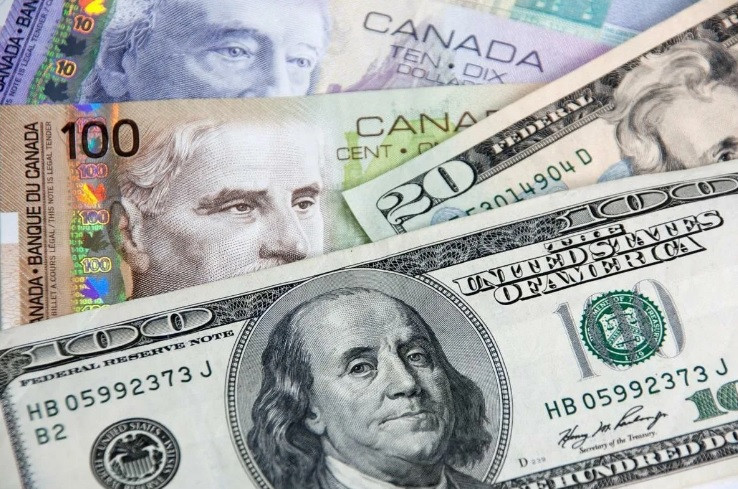
Your first $100 online. It sounds small compared to the income reports and success stories you’ve read. But here’s the thing — for almost everyone who has ever built a real online income, that first $100 was the turning point. Not because of the money. Because of what it proved.
It proved the model works. It proved someone out there will pay for what you’re offering. It proved that you — specifically you — are capable of earning money outside of a traditional job.
Everything after that first $100 is just doing more of the same thing. The first $100 is the hardest.
This guide gives you a concrete, step-by-step path to earning your first $100 online — not eventually, not “in a few months if everything goes perfectly,” but as fast as genuinely possible with real, consistent effort. We’ll walk through five different methods, each with an exact action plan, and help you choose the one that fits your situation right now.
Why Your First $100 Is the Most Important Money You’ll Ever Make Online
Most people never make their first dollar online. Not because it’s impossible — but because they quit before they get there. They spend weeks preparing, researching, and setting up, hit a wall of silence and zero results, and conclude the whole thing is a scam or that they’re not cut out for it.
Your first $100 does several things that no amount of reading or planning can do:
- It proves the specific method works in your specific situation
- It gives you real feedback — what worked, what didn’t, what to do differently
- It removes the psychological barrier that stops most people from believing they can earn online
- It creates momentum — the second $100 always comes faster than the first
So let’s get you there. Here are five proven paths, each capable of generating $100 in your first 1–4 weeks with genuine effort.
This is the fastest path to $100 for most beginners — because you’re selling your time and skills directly to clients, with no waiting for traffic or product sales. The main barrier people imagine is “I don’t have any skills” — but that’s almost never true. Can you write clearly? Research topics online? Manage a spreadsheet? Proofread? Translate? Enter data? These are all sellable skills on Upwork right now.
The key to getting that first $100 fast is not finding the perfect job — it’s getting into action immediately. Most beginners spend too long perfecting their profile and not enough time actually sending proposals. Your profile doesn’t need to be perfect on Day 1. It needs to exist.
The fastest path to $100 on Upwork:
- Focus on entry-level jobs in a niche you have any knowledge of — even basic life experience counts
- Apply to jobs under $100 first — easier to win, faster to deliver, builds your review score
- Send at least 10 proposals before evaluating results — most beginners quit after 3
- Keep proposals short, specific, and focused on the client’s problem — not your lack of experience
- Use Claude to help draft strong proposals — give it the job description and your relevant background and ask for a compelling pitch
- Day 1: Create your Upwork profile. Headline should be specific: “Virtual assistant for coaches and consultants” not “I do many things.”
- Day 1–2: Use Claude to write 2 sample work pieces in your niche — upload as portfolio
- Day 2–7: Submit 8–10 proposals per day to entry-level jobs. Use the free connects daily without fail.
- Day 3–10: First client responds. Deliver excellent work, on time, with a friendly tone.
- After delivery: Ask for a review. That first 5-star review is worth more than the money.
This is arguably the single fastest path to $100 online — and the most overlooked. Look around your home. Clothes you don’t wear. Electronics gathering dust. Books you’ve already read. Furniture you’d like to replace. Most homes contain hundreds of dollars in sellable items that are just waiting to be listed.
This isn’t a scalable business model — but it’s not meant to be. The goal is your first $100. Once you have it, you can reinvest it into something that scales. Selling what you own is the fastest proof that online selling works, with the lowest possible barrier to entry.
Where to sell your stuff online:
- Facebook Marketplace — free to list, huge local audience, no shipping needed for local pickup
- eBay — best for electronics, branded items, collectibles, and anything with a known market value
- Vinted — specifically for clothing, shoes, and accessories. Massive buyer base.
- Etsy — if you have handmade, vintage, or unique items
- Walk through your home with a box. Anything you haven’t used in 6+ months goes in the box.
- Research each item’s value on eBay (search > “Sold listings” to see actual prices achieved)
- Photograph each item in good natural light against a clean background — photos are 70% of the sale
- Write honest, specific descriptions: brand, condition, dimensions, any flaws
- Price 10–15% below the lowest current listing to sell fast rather than wait weeks
- Respond to buyer messages within 2 hours — fast response converts browsers to buyers
Once you’ve made $100 from your own items, you understand the selling process. The natural next step is retail arbitrage — buying discounted items from charity shops, clearance sales, or local markets and reselling them online at a profit. This is a real, scalable model that many people turn into significant monthly income.
A digital product — a template, a guide, a checklist, a prompt pack, a printable — takes a few hours to create and can earn money indefinitely. It’s not the fastest path to $100, but it’s one of the most satisfying because once it’s live, each sale requires zero additional work from you.
The biggest beginner mistake with digital products is trying to create something too ambitious — a full course, a massive eBook. For your first $100, aim small and specific. A single well-designed template or a focused 10-page guide for a specific audience is enough.
The fastest digital product to create and sell:
- A Canva template pack — 10–15 matching social media templates for a specific niche. Use Canva free tier to design, sell on Gumroad (free) or Etsy.
- An AI prompt pack — 25–50 tested prompts for a specific use case (social media managers, email marketers, coaches). Use Claude to develop and test the prompts, package as a PDF.
- A niche checklist or guide — a 5–10 page PDF solving one specific problem for one specific audience. Write with Claude, format in Canva.
- Day 1: Choose your product type and niche audience. The narrower the better — “Instagram templates for dog groomers” not “Instagram templates.”
- Day 2–3: Create the product using Canva + Claude. Aim for quality over quantity — 10 great templates beat 50 mediocre ones.
- Day 4: Set up a free Gumroad account. Write your product listing using Claude — describe the problem it solves, who it’s for, and what’s included.
- Day 5–14: Promote in relevant Facebook groups, Pinterest, and niche communities. Don’t spam — show the product in use, explain the value, share the link.
You don’t have to reach clients on the other side of the world to make your first $100 online. Local businesses — restaurants, salons, gyms, tradespeople, shops — need digital services just as much as international companies do, and they’re often easier to reach, easier to trust-build with, and easier to collect payment from.
The services most in demand from local businesses right now: social media content creation, basic graphic design (menus, flyers, social posts), Google Business profile setup and optimisation, and simple website updates or copywriting. All of these can be delivered remotely, paid via bank transfer or PayPal, and require skills that are highly learnable with AI tools.
How to land a local client this week:
- Make a list of 20 local businesses in your area that have weak or inactive social media presence
- Email or DM each one: “I noticed your Instagram hasn’t been updated in a while — I help small businesses like yours stay consistently active on social media. Would you be open to a quick call to see if I can help?”
- Offer to do the first month at a discounted rate ($50–$100) in exchange for a testimonial
- Deliver using the AI tools workflow: Claude for captions, Canva for graphics, Buffer for scheduling
- Collect payment, collect the testimonial, raise your rate for the next client
Dropshipping — selling products online without holding stock — can generate $100 in your first month if you choose the right product and drive traffic through organic social media. You don’t need to spend anything on ads. You need a product that demonstrates well on video, a simple Shopify store, and consistent TikTok or Instagram posting.
This is not the fastest method on this list, and it’s not the easiest. Product research matters enormously — the wrong product will produce zero sales regardless of how hard you market it. But for people who enjoy social media content creation and want to build something more product-oriented, it can generate $100 faster than blogging or affiliate marketing.
The minimum viable dropshipping setup for your first $100:
- Research one product with proven TikTok demand and no strong branded competition (2–3 hours)
- Set up a free Shopify trial store with one product and a free theme (4–6 hours)
- Connect DSers (free) for fulfilment via AliExpress
- Create 1–2 TikTok videos per day demonstrating the product — no face needed, no editing skills required
- Your first $100 in revenue (approximately 3–5 orders at $20–$35) can arrive within 2–3 weeks of consistent posting if the product resonates
Comparing All 5 Methods: Which Is Right for You?
| Method | Startup Cost | Speed to $100 | Skills Needed | Scales Beyond $100? |
|---|---|---|---|---|
| Freelancing (Upwork/Fiverr) | Free | 3–10 days | Any transferable skill | Yes — to $2,000–$5,000/month |
| Selling what you own | Free | 1–5 days | None required | Limited (retail arbitrage extends it) |
| Digital products | Free | 2–4 weeks | Basic design (Canva) | Yes — passive, highly scalable |
| Local service (social media) | Free | 1–2 weeks | Basic social media literacy | Yes — to $3,000–$5,000/month |
| Dropshipping (organic) | Free–$30 | 2–4 weeks | Product research, content creation | Yes — to $1,000–$10,000+/month |
What the Path to $100 Actually Looks Like — Day by Day
Using the freelancing method (fastest for most beginners) as an example, here’s a realistic day-by-day picture of what getting to $100 actually looks like:
Why Most Beginners Don’t Make Their First $100 (And How to Avoid It)
The path to $100 is genuinely simple. But “simple” and “easy” are different things. Here’s where most people fall down — and how to avoid the same traps:
They prepare indefinitely instead of starting
Reading one more article, watching one more tutorial, building a more perfect profile — these are all forms of productive-feeling procrastination. The only way to make your first $100 is to start pitching, posting, or listing. Everything else is delay. If you’ve been “researching” for more than a week without taking a concrete action, that is the problem — not your skills or your niche.
They quit after too few attempts
Ten Upwork proposals with no response is not failure — it’s just Week 1. Twenty listings on Facebook Marketplace that haven’t sold yet is not failure — it’s a pricing or photography issue you can fix. Set a commitment threshold before you evaluate: 50 proposals, 30 days of posting, 20 outreach emails. Only evaluate once you’ve hit that threshold.
They target the wrong buyers
Sending generic proposals to highly competitive jobs. Posting products in groups full of other sellers rather than buyers. Targeting markets where buyers don’t spend money. The method matters less than the targeting. Find the people who already pay for what you’re offering and put yourself in front of them.
They undervalue what they’re offering
Charging $5 for work that takes an hour isn’t just bad economics — it attracts the clients who value your work least and treats them worst. Charge fairly. $15–$25/hour for entry-level work is reasonable and still gets you to $100 faster than exhausting yourself at $5.
The AI Tools That Speed Up Every Method
Regardless of which path you choose, AI tools can significantly accelerate your path to $100 by reducing the time cost of the most friction-heavy tasks. Here’s the essential stack for each method:
| Method | AI Tool | What It Does For You |
|---|---|---|
| Freelancing | Claude | Drafts work samples, writes proposals, produces deliverables faster |
| Selling items | ChatGPT | Writes compelling listings and product descriptions that convert |
| Digital products | Claude + Canva AI | Creates product content, designs layouts, writes listing copy |
| Local services | Claude + Buffer | Batch-writes social captions, schedules content for clients |
| Dropshipping | ChatGPT + Canva | Product descriptions, ad creative, social media captions |
Your First $100 Checklist
Before you finish reading this article, pick your method and complete at least the first item on this list today — not tomorrow, not this weekend. Today.
✔ First $100 Action Checklist
- I have chosen ONE method from this guide — not two, not three. One.
- I have created the account I need today (Upwork, Gumroad, eBay, Shopify, etc.)
- I have taken one first action: sent a proposal, listed an item, or created a product draft
- I have set a daily action target (e.g. 8 proposals/day, 2 TikTok videos/day, 5 item listings)
- I have committed to 30 days before evaluating whether this method is working
- I have set up a free Claude account to help with writing and drafting
- I have not bought any courses or paid any tools before making my first dollar
- I understand that the first attempt might not work — and that is data, not failure
🚀 What Comes After Your First $100
- $100 → $500/month: Repeat what worked. Add one more client, list more products, publish more content. The second hundred is always faster than the first.
- $500 → $1,000/month: See our Zero to $1,000/Month Roadmap — the exact phase-by-phase plan for getting there.
- $1,000 → $5,000/month: Read our Income Reports & Case Studies — six real people who made this exact journey.
- Tools to invest in when you’re earning: See 8 Online Business Tools I Actually Pay For — when and what to upgrade.
Frequently Asked Questions
How long does it actually take to make your first $100 online?
With genuine daily effort and the right method, most people reach $100 within 1–4 weeks. Selling your own items can get you there within days. Freelancing typically takes 1–2 weeks of consistent proposals. Digital products and dropshipping usually take 2–4 weeks. The variable that matters most isn’t the method — it’s the consistency of daily action. One hour per day, every day, beats four hours once a week every time.
Do I need any money to start?
For four of the five methods in this guide, the answer is genuinely no. Upwork, Gumroad, Facebook Marketplace, and Vinted are all free to use. Shopify has a free trial. The only method with even a small cost is dropshipping (domain + Shopify subscription), and even that can be delayed until you’ve validated a product organically. Start without spending anything and invest only when you’re earning.
What if I try and still don’t make $100?
Then look at the data before concluding the method doesn’t work. Did you get any interest — profile views, responses, shop visits? If yes, you have a conversion problem (your pitch or product isn’t compelling enough). If no, you have a visibility problem (not enough outreach or promotion). Both are fixable. Most “failures” are actually stalled beginners who need a small tactical adjustment, not a completely different approach. Our Honest Truth About Making Money Online addresses this diagnostic process in detail.
Which method is best if I’m based in Africa or a developing country?
Freelancing on Upwork is typically the strongest option — it pays in USD/GBP/EUR, and your lower cost of living means the income goes much further than it would for a Western freelancer. Payoneer is the most widely used payment solution for African freelancers receiving international payments. Digital products (via Gumroad) are also accessible globally. Check payment options for your specific country before committing to any platform.
Your $100 Is Waiting. Go Get It.
Everything in this guide works. Every method here has helped real beginners earn their first $100 online — some in days, some in a few weeks. The difference between those who get there and those who don’t is almost never skill, talent, or resources. It’s whether they took consistent action for long enough to reach it.
You now have five concrete paths, exact action plans, the right free tools, and a checklist to get started today.
The only thing left is to close this article and start.
📖 More Beginner Guides at OurInternetBusiness.com
We publish practical, honest guides for building real online income every week — starting from zero. Visit OurInternetBusiness.com and bookmark it. Your next step is already there.