ChatPadi vs Shopify: Which Is Better for African Sellers?
ChatPadi vs Shopify: Which Is Better for African Sellers?
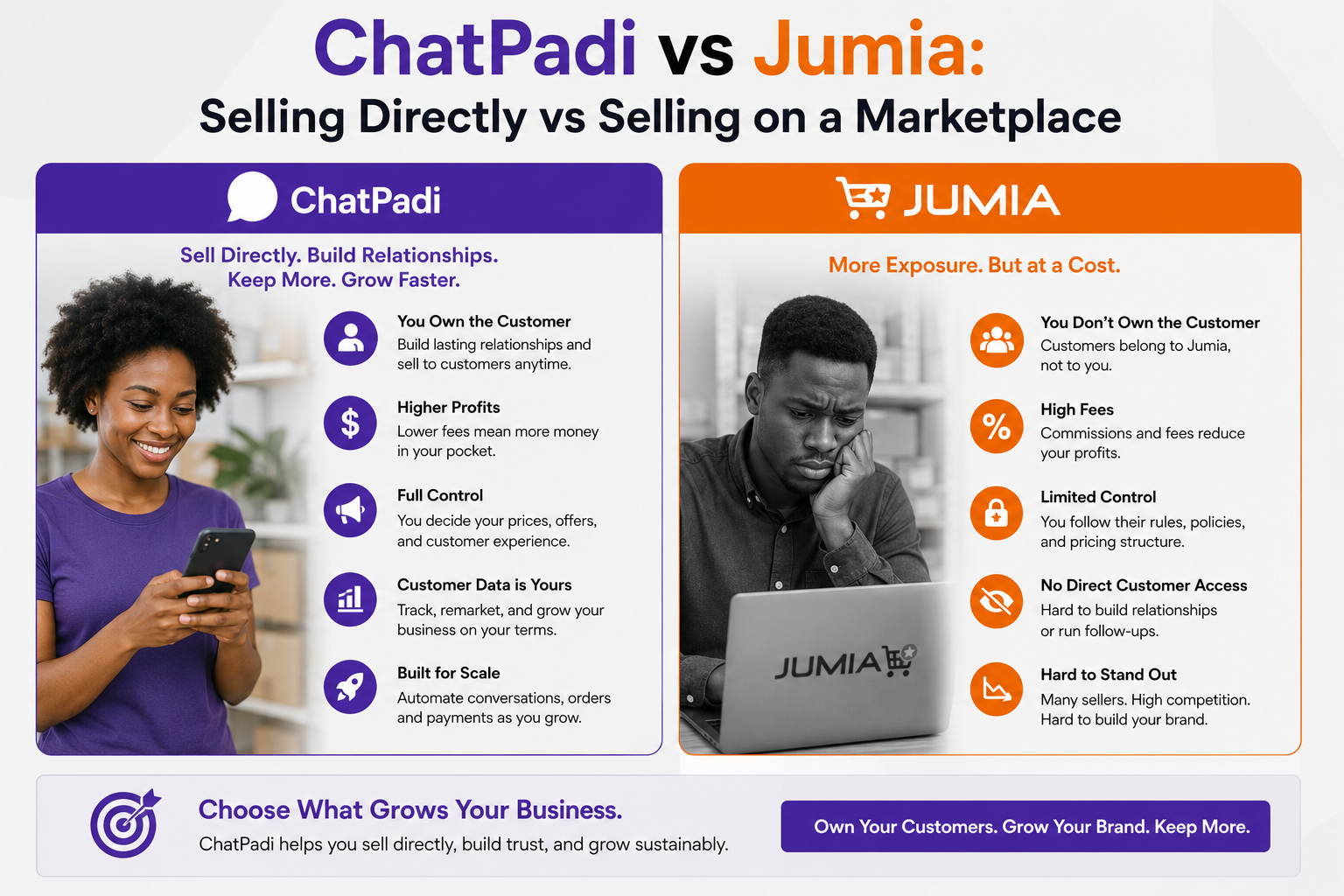
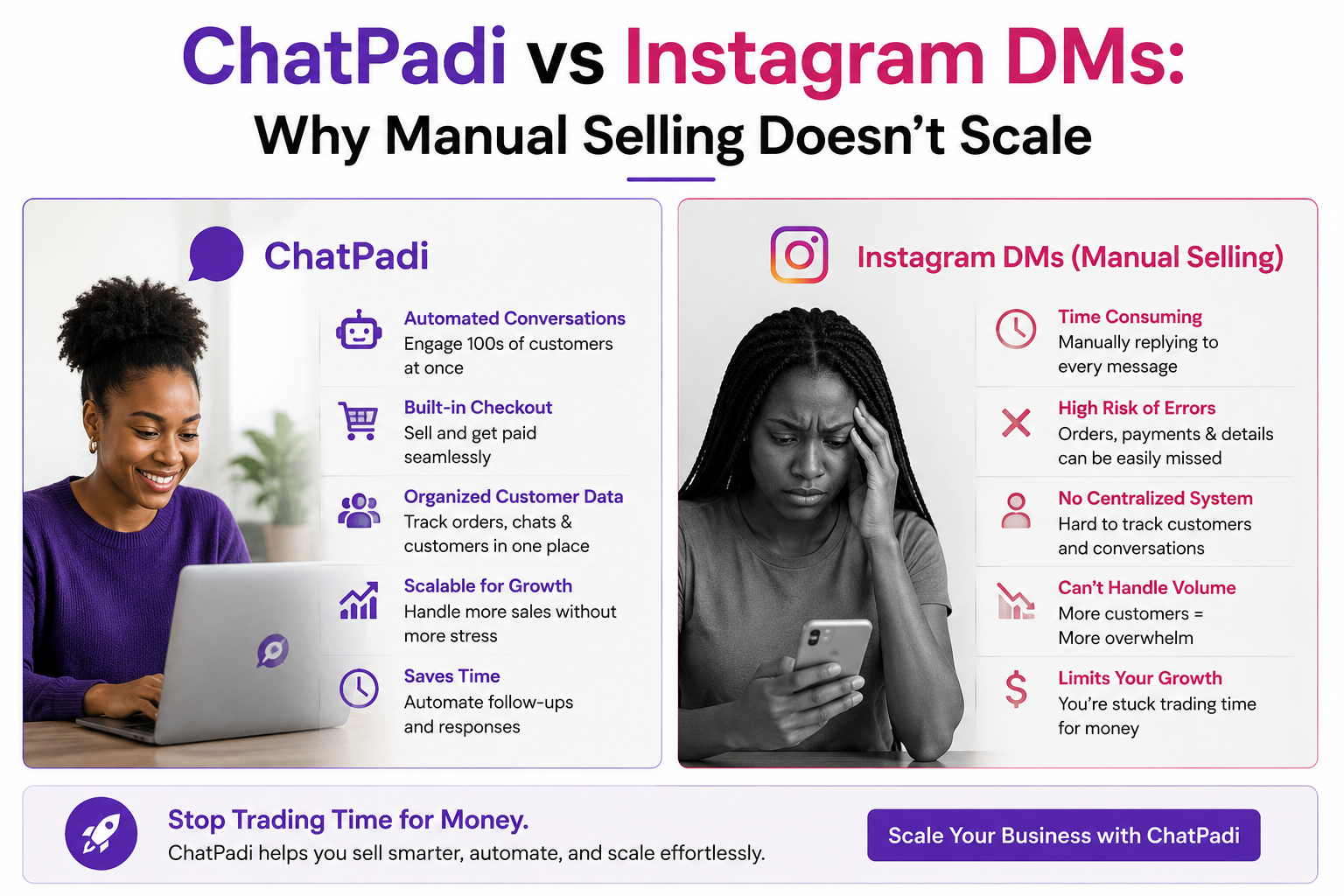
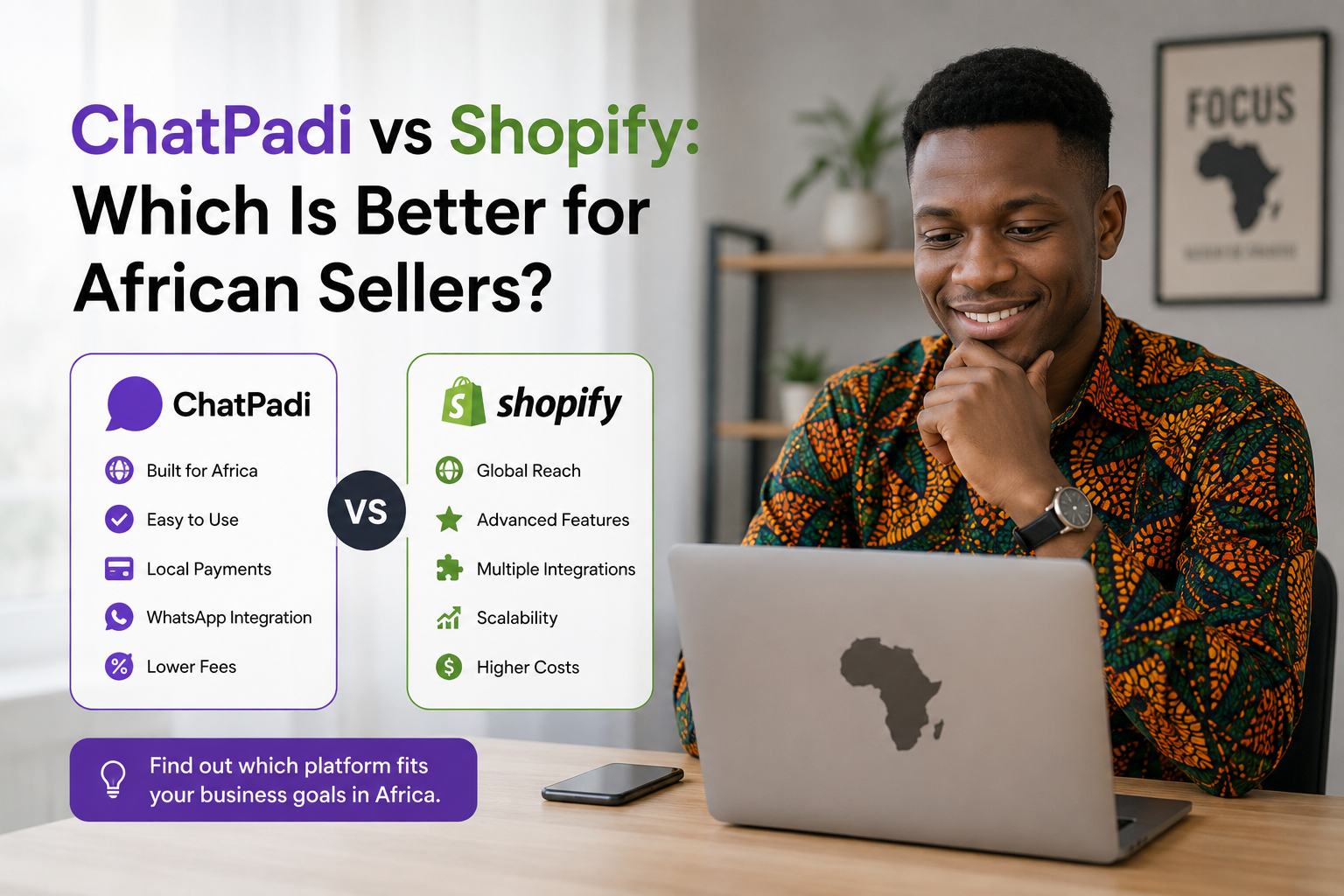
Shopify is the world’s most popular e-commerce platform. ChatPadi is built specifically for conversational, AI-driven selling in markets where WhatsApp and Mobile Money dominate. They solve different problems, cost very differently for African merchants, and suit different kinds of sellers. This guide breaks down exactly where each one wins.
The honest starting point: Shopify is an excellent platform built by a company that has spent two decades perfecting the traditional e-commerce experience. It is not a bad product. It simply was not designed with African Mobile Money infrastructure, WhatsApp-native shopping behaviour, or AI-driven conversational selling as its core use case. ChatPadi was.
The Payment Problem: Shopify’s Biggest Weakness for African Sellers
The single most important fact for any African seller evaluating Shopify is this: Shopify Payments, Shopify’s own built-in payment processor, is not available in most African countries. South Africa, Ghana, Nigeria, Kenya, and the vast majority of the continent are excluded from Shopify Payments support.
This is not a minor inconvenience. It changes the entire cost and complexity structure of running a Shopify store in Africa.
What this means in practice: Without Shopify Payments, every African merchant must connect a third-party payment gateway (Paystack, Flutterwave, PayFast, Peach Payments, or similar). And critically, Shopify charges its own additional transaction fee on top of whatever that third-party gateway already charges, ranging from 2% on the Basic plan down to 0.6% on the Advanced plan. This stacking effect means a South African merchant on Shopify Basic using a typical local gateway can pay an effective rate approaching 5.5% per transaction once both fees are combined, according to 2026 pricing analysis from South African Shopify agencies.
ChatPadi was built without this problem. Mobile Money, the dominant payment method across Ghana, Nigeria, Kenya, and most of Sub-Saharan Africa, is a native, first-class payment option in ChatPadi, not a workaround. There is no separate gateway-stacking fee structure to navigate.
Pricing Comparison
| Cost Factor | Shopify | ChatPadi |
|---|---|---|
| Starting monthly cost | From $5 (Starter, limited) to $39+ (Basic, full store) | Free (Starter plan) |
| Billing currency | USD only, fluctuates with exchange rate | Local currency support |
| Native local payment processor | Not available in most African countries | Mobile Money native, no separate gateway needed |
| Additional gateway transaction fee | 0.6% to 2% stacked on top of gateway fees | No additional platform fee on payments |
| Domain and hosting | Separate cost ($13 to $30/year for domain) | Included, store link provided |
| Apps for added functionality | Often required, each with its own monthly fee | Core features included in plan |
| WhatsApp-native selling | Requires third-party app integration | Built-in, core to the product |
| AI conversational agent | Not native, requires separate app/integration | Built-in (Ama) |
| Setup complexity for a non-technical seller | Moderate to high, often needs a developer or agency | Low, guided 3-step wizard |
Beyond the subscription cost, many African Shopify merchants also budget for ongoing support and development, since the platform’s flexibility comes with a learning curve. South African Shopify agencies commonly quote monthly retainers in the thousands of rand for ongoing store management, app updates, and optimisation work, on top of the platform subscription itself.
What Shopify Does Well
It would be inaccurate to suggest Shopify has no advantages. For the right kind of business, it remains an excellent platform.
- Massive app ecosystem: Thousands of apps exist for nearly any feature you could want, from advanced inventory management to loyalty programmes to complex shipping calculators.
- Global scale and reliability: Shopify powers millions of stores worldwide and has proven infrastructure for high-volume, high-traffic businesses.
- Full design control: Themes and customisation options let you build a highly branded, unique-looking website if visual design control matters significantly to your brand.
- SEO and content tools: Built-in blog functionality and SEO controls support content marketing strategies that drive organic search traffic over time.
- Established trust: International customers, particularly in markets like the UK, US, and Europe, recognise and trust the Shopify checkout experience.
If your business sells primarily to international, card-paying customers, needs deep customisation, or is planning to scale into a large multi-market operation with a dedicated development team, Shopify’s strengths become more relevant.
What ChatPadi Does Well
Same Situation, Different Platform
Which One Should You Choose?
Choose Shopify if:
- Your customers are primarily international and pay by card
- You need deep visual customisation and a unique website design
- You have budget for a developer, agency, or significant time investment in setup
- You are planning a large-scale, high-SKU catalogue with complex inventory needs
- SEO-driven organic search traffic is central to your growth strategy
Choose ChatPadi if:
- Most of your customers already find and message you on WhatsApp or Instagram
- Mobile Money is your customers’ primary payment method
- You want to launch quickly without hiring a developer
- You want an AI agent handling customer conversations and orders automatically, not as an add-on
- You are currently selling manually and want to automate without rebuilding your entire sales process
The honest middle ground
Some sellers use both. A seller with an established Shopify store serving international, card-paying customers can run a ChatPadi storefront alongside it specifically for their WhatsApp and local Mobile Money customers, capturing the audience that a traditional website checkout serves poorly. This is not unusual: the two platforms are not mutually exclusive, and for sellers with a genuinely mixed customer base (local Mobile Money buyers plus international card buyers), running both can capture more of the total addressable market than either platform alone.
For most small and medium African sellers just starting to sell online or currently managing sales manually through WhatsApp, the practical answer is straightforward: ChatPadi removes the payment friction, setup complexity, and cost layers that make Shopify a harder fit for the African commerce reality, while delivering an AI sales agent that Shopify does not include natively at any price tier.
Common Questions
Can I migrate my existing Shopify products to ChatPadi?
Yes. Product information (names, descriptions, prices, photos) can be added to your ChatPadi dashboard directly. For sellers with large catalogues, check your current ChatPadi plan for bulk import options that can speed up migrating an existing product list.
Does ChatPadi support international card payments like Shopify does?
Yes. ChatPadi supports Flutterwave and Stripe alongside Mobile Money, so sellers serving diaspora or international customers paying by Visa or Mastercard are covered without needing Shopify’s website-and-gateway-stacking approach.
Is Shopify ever the better choice for a seller in Ghana or Nigeria?
Yes, in specific cases. A seller whose customer base is genuinely majority-international, card-paying, and values a highly customised website experience may find Shopify’s design flexibility worth the additional cost and setup complexity. For a seller whose customer base is majority-local and Mobile-Money-paying, ChatPadi removes friction that Shopify structurally cannot in most African markets due to the absence of Shopify Payments.
How does ChatPadi compare on ongoing support and maintenance?
Shopify stores, particularly customised ones with multiple apps, often need ongoing technical maintenance: app updates, theme adjustments, and troubleshooting integration issues, which is why many African Shopify merchants pay for ongoing agency retainers. ChatPadi’s core maintenance for most sellers is keeping the product catalogue and policies current, a task that does not require technical skill or developer involvement.
Skip the Gateway Stacking Fees
Set up your free ChatPadi store with native Mobile Money support and an AI agent included from day one. No third-party gateway workaround required.
Start Free TodayFree to start. No credit card required. Live in under an hour.